January marked a strong start to 2026, with important infrastructure improvements, new partnerships, and community conversations across Ontology Network and ONTO Wallet. Below is a structured overview of what happened and why it mattered.
 Ontology Network Updates
January focused on network optimization, thought leadership, and strengthening the foundation for enterprise adoption.
A key milestone this month was the 80% reduction in MainNet gas prices, implemented on January 22 following community governance approval. This reduction significantly lowers transaction costs across the network, improving accessibility for developers and users alike.
On the thought leadership front, Ontology published articles exploring Web3 distribution evolution with a focus on trust and discovery, as well as insights on CeDeFi as a bridge between liquidity and self-custody. These pieces reinforce Ontology’s position as a thought leader in decentralized infrastructure. For broader context on these themes, a16z crypto explores how portable reputation is reshaping on-chain identity.
Additional highlights included:
2025 ecosystem expansion highlights showcasing growth across identity and DeFi verticals
Ongoing community governance participation in network parameter decisions
Continued infrastructure reliability and node performance monitoring
 Community Spaces in January
Web3 Unlocks Live Space exploring opportunities with ecosystem partners
These conversations provided insight into both technical developments and broader ecosystem direction.
 ONTO Wallet Highlights
January was an active month for ONTO Wallet, with new partnership integrations and trading campaigns driving user engagement.
The previously announced partnership with Changelly officially went live this month, expanding in-wallet exchange options for users. To celebrate the integration, ONTO launched a trading competition with a total prize pool of 5,400 USDT.
ONTO continued its focus on helping users navigate Web3 with confidence, maintaining its position as a trusted discovery wallet designed for clarity and security. As blockchain identity tools enter everyday life, self-custody wallets like ONTO play an increasingly central role.
 Network Activity Snapshot
As of January, the Ontology network has processed:
20,162,892 total transactions
This milestone reflects continued on-chain usage across the ecosystem.
 Looking Ahead
With gas costs significantly reduced and new partnerships in place, Ontology is well-positioned for continued growth in 2026. Industry analysts identify digital identity, regulation, and government adoption as pivotal Web3 trends this year, areas where Ontology’s infrastructure continues to deliver. The network remains focused on infrastructure reliability, ecosystem expansion, and community-driven governance.
Thank you for being part of the Ontology ecosystem. We look forward to sharing more updates in February.
December marked a busy close to the year, with important infrastructure updates, ecosystem milestones, and community conversations across Ontology, ONTO Wallet, and the wider network. Below is a structured overview of what happened and why it mattered.
Ontology Network Updates
December focused heavily on infrastructure stability, long-term sustainability, and ecosystem alignment.
Early in the month, Ontology issued a mandatory MainNet v3.0.0 upgrade notice, requiring node operators to update by December 3 to avoid network disruption. This upgrade was accompanied by planned ONG supply adjustments around December 15, reinforcing Ontology’s commitment to predictable and transparent network operations.
To mark Ontology’s 8th anniversary, the team hosted a series of community discussions, including special Privacy Hour X Spaces focused on ecosystem progress and future direction, as well as Community Connect Spaces covering anniversary updates and broader Web3 trends.
December also saw Ontology join the Circle Alliance Program, opening the door for deeper collaboration around on-chain economies powered by USDC.
Additional highlights included:
- Publication of the House of ZK report, covering MainNet upgrades and ecosystem developments
- A new Consensus Round 266 summary, outlining yield performance and staking growth
- Announcement of Ontology & Me campaign winners, distributing 1,000 ONG based on community voting
- Launch of Ontello Beta, introducing a new social Web3 application with encrypted messaging and AI agents
Community Spaces in December
These conversations offered insight into both technical developments and broader ecosystem direction.
ONTO Wallet Highlights
December was also an active month for ONTO Wallet, with a strong focus on discovery, trading activity, and community participation.
ONTO published its 2025 Year in Review, reflecting on the product’s evolution into a trusted Web3 discovery wallet designed to help users explore projects with greater clarity and confidence. This was complemented by the launch of the Year in Review feature inside the app, along with a community sharing campaign offering rewards of up to 100 USDT.
ONTO also announced an official partnership with Changelly, expanding exchange options inside the wallet. The integration is scheduled to go live in January, with related campaigns to follow.
Trading activity remained strong throughout the month, including:
- Final leaderboards and winner announcements for the ONTO x Exolix Trading Competition
- Multiple trading lucky draw campaigns with rewards in USDT and ONG
- A new Exolix trading campaign offering a total prize pool of 4,400 USDT
In parallel, ONTO continued community education efforts, publishing guidance on non-custodial wallet security and promoting discussions on building sustainable Web3 communities.
Network Activity Snapshot
As of December, the Ontology network has processed:
20,149,529 total transactions and over 200 million ONT has been staked.
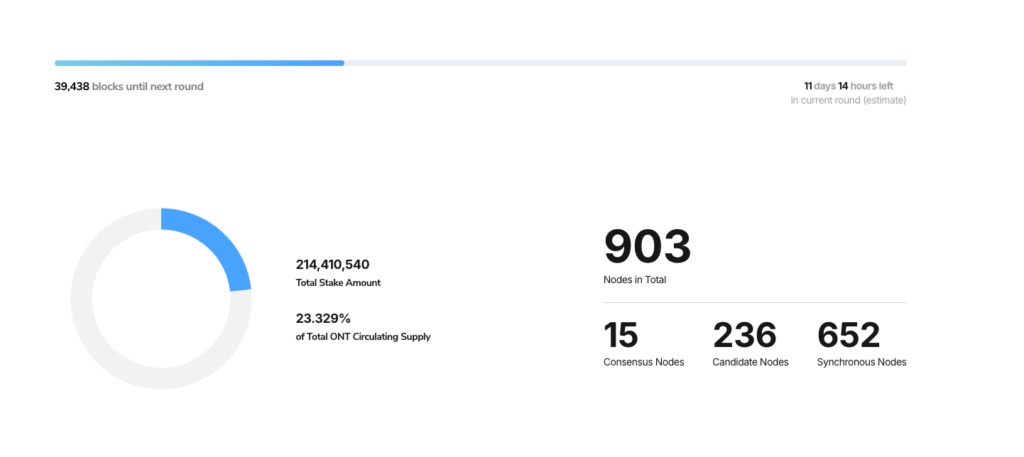
This milestone reflects continued on-chain usage across the ecosystem.
Looking Ahead
As the year comes to a close, Ontology remains focused on infrastructure reliability, responsible ecosystem growth, and long-term engagement models. More updates on upcoming initiatives and community programs will be shared in the new year.
Thank you for being part of the Ontology ecosystem. We look forward to continuing the journey together in 2026.
]]>the biggest stories in crypto right now all point toward one thing — identity.
From regulation and social media to AI and enterprise, decentralized identity (DID), verifiable credentials, and reputation are quickly moving from “nice to have” to “core infrastructure.” Below is a recap of the key narratives we covered, and how they connect directly to what Ontology has been building for years.
👉 Download ONTO Wallet to create your first ONT ID, manage assets, and start building portable reputation across Web3.
As we head toward Ontology’s upcoming anniversary, this article is part of a wider series that highlights how today’s biggest crypto narratives are converging with the identity and trust vision we have been building for years.
The Global Regulatory Shift Toward Identity
Around the world, regulators are tightening their approach to crypto — but the most interesting trend isn’t enforcement, it’s how they’re thinking about identity.
Recent developments around MiCA implementation in Europe, growing scrutiny of exchanges in Asia, and continued enforcement in the U.S. all share a common theme:
regulators are increasingly talking about reusable, portable, privacy-preserving identity.
Instead of forcing users to complete KYC from scratch on every new platform, the emerging model looks like this:
- Verify once with a trusted provider
- Receive a credential that proves your status
- Reuse that credential across multiple platforms and services
This model:
- Reduces friction for users
- Lowers compliance overhead for platforms
- Creates a safer environment without over-collecting personal data
This is exactly the world Ontology has been designing for.
With ONT ID and the Verifiable Credentials framework, users can:
- Prove who they are without repeatedly sharing sensitive documents
- Maintain user-owned, privacy-preserving identity
- Authenticate across platforms in a compliant way
- Meet regulatory requirements without compromising control over their data
Ontology has been advocating for reusable, verifiable identity for years. Now, the regulatory conversation is catching up. As this compliance layer becomes more standardized, ONT ID is positioned to act as a core building block for privacy-first, regulation-ready identity in Web3.
Social Platforms and Wallets Are Turning to DID
Another major narrative this week was the growing adoption of DID in the social and wallet space.
Decentralized social projects like Farcaster and Lens are putting identity at the center of their ecosystems, while larger, more traditional platforms and wallet providers are increasingly exploring stronger identity frameworks in response to:
- AI-generated content
- Deepfakes
- Fake or bot-driven accounts
These dynamics are pushing apps toward identity systems that can:
- Verify that a user is a real human
- Protect pseudonymity while still proving authenticity
- Make reputation portable across apps and communities
Again, this is where Ontology’s DID stack fits naturally.
Using ONT ID and Ontology’s DID infrastructure, social apps and wallets could enable:
- Cross-platform authentication using a single identity
- Human verification without exposing private data
- Portable, DID-based social reputation
- Protection against bots, impersonators, and sybil attacks
In a world increasingly flooded with AI-generated profiles and synthetic content, DID is moving from optional addon to core requirement. Ontology offers a sovereign, decentralized, and portable identity layer that social platforms and wallet providers can integrate to build more trusted, user-centric experiences.
AI + Web3: Building the Trust Layer
One of the most important conversations of the week was the intersection between AI and blockchain.
Recent reports from leading ecosystem players have focused on a key idea:
AI is powerful, but without a trust layer, it becomes risky.
As AI reaches the point where its outputs are almost indistinguishable from human-created content, we face a global trust challenge:
We need cryptographic proof of:
- Who created a piece of content
- When it was created
- Whether it has been altered
- Whether we are interacting with a human, an AI agent, or a hybrid
This is where decentralized identity and verifiable credentials become essential.
Ontology’s infrastructure is designed not just for human identities, but also for:
- AI agents
- Bots and automated systems
- Machine-to-machine interactions
In an AI-powered world, Ontology envisions:
- Humans verifying that they are interacting with a legitimate AI service
- AI agents verifying each other before exchanging data or executing tasks
- Content tied cryptographically to its original creator and source
- Algorithms and models carrying credentials that prove their integrity and provenance
The narrative is shifting from generic “AI + blockchain hype” to identity-driven trust for AI. Ontology is already building the DID and credential layers that can anchor this new trust fabric.
Reputation in DeFi, GameFi, and Airdrops
Reputation is rapidly becoming one of the most valuable assets in Web3.
This week highlighted a surge of interest in reputation-based systems across:
- DeFi protocols, especially lending
- GameFi projects, battling bots and unfair play
- Airdrops and community rewards, focusing on quality over quantity
The old model of “anyone with a wallet can claim” is fading. Projects increasingly want:
- Genuine, long-term users
- Reduced sybil activity and bot farming
- Reward mechanisms that favor engaged communities rather than opportunists
DeFi is exploring reputation-based credit; GameFi is seeking identity-aware mechanisms to ensure fair participation; and airdrops are increasingly gated by activity, history, and contribution quality.
Ontology’s identity and reputation tools offer exactly what this evolution needs:
- Sybil-resistant reward systems
- Verified, identity-aware airdrops
- Trust-based access tiers and community segments
- Loyalty and engagement scoring based on real behavior
- Identity-driven community structures and roles
With ONT ID and Ontology’s reputation framework, reputation becomes portable, verifiable, and secure — not trapped inside a single platform. This unlocks a more sustainable and fair approach to incentives across ecosystems.
Enterprise Interest in Decentralized Identity
Beyond crypto-native platforms, enterprises across multiple industries are accelerating their exploration of decentralized identity and verifiable credentials.
We are seeing growing activity around DID in:
- Supply chain – product-level identity and provenance
- Education – verifiable diplomas, credentials, and skill certificates
- Workforce and HR platforms – tamper-proof worker profiles and histories
- Healthcare – privacy-preserving patient identity and data access control
Enterprises are looking for ways to:
- Reduce fraud
- Improve data integrity
- Avoid centralized honeypots of sensitive information
- Comply with strict data protection regulations
Ontology is well positioned here, with years of experience designing and deploying identity solutions for real-world partners in finance, automotive, and more.
Our DID and credential tools are:
- Modular – adaptable to different use cases and architectures
- Cross-chain – not locked into a single network
- Enterprise-ready – designed to meet real operational and compliance needs
As more industries converge on DID standards, Ontology’s infrastructure can serve as a reliable, interoperable trust layer for real-world data.
Where Ontology Is Focusing Next
In light of these converging trends — regulation, social identity, AI, reputation, and enterprise adoption — Ontology is doubling down on several strategic priorities:
- Expanding interoperable DID across multiple blockchains
- Building identity support for AI agents and automated systems
- Enhancing reputation scoring models for users, entities, and machines
- Deepening ecosystem partnerships across DeFi, GameFi, and infrastructure
- Strengthening developer tooling around ONT ID and verifiable credentials
- Continuing enterprise pilots and collaborations in key industries
- Growing community reputation and reward mechanisms powered by DID
These focus areas place Ontology at the center of the emerging trust-layer narrative for both Web3 and AI.
Conclusion: Identity as the Foundation of the Future Internet
The stories shaping crypto and Web3 this week — from regulatory frameworks and social platforms to AI and enterprise systems — all point in the same direction.
Identity is becoming the foundation of the next internet.
Decentralized identity, verifiable credentials, and portable reputation are no longer niche concepts. They are quickly becoming essential components for:
- Compliant yet user-centric regulation
- Safer and more authentic social platforms
- Trustworthy AI interactions
- Fair and sustainable DeFi and GameFi ecosystems
- Secure, interoperable enterprise data infrastructure
This is the world Ontology has been building toward from the start.
As the demand for a decentralized trust layer grows, ONT ID and Ontology’s broader identity stack are ready to power the next generation of applications — across Web3, AI, and the real-world economy.
Ontology will continue to push forward as the trust layer for Web3, AI, and beyond.
Recommended Reading
- 8 Years of Trust, Your Ontology Story Begins Here – A look back at Ontology’s journey as a trust-focused Layer 1, highlighting the milestones, partnerships, and identity innovations that shaped its first eight years — and where it’s heading next.
- ONT ID: Decentralized Identity and Data – A deep dive into Ontology’s decentralized identity framework, including DID, verifiable credentials, and how ONT ID underpins privacy-preserving identity across multiple ecosystems.
- Verifiable Credentials & Trust Mechanism in Ontology – Technical overview of how Ontology issues, manages, and verifies credentials using ONT ID, including credential structure, signatures, and on-chain attestations.
- Identity Theft Explained – A clear, practical explainer on how identity theft works today and how decentralized identity, self-sovereign identity, and zero-knowledge proofs can finally flip the script in users’ favor.
Ready to keep exploring Ontology and DID?
 Stay connected with Ontology, join our community, and never miss an update:
https://linktr.ee/OntologyNetwork
During Round 266, we are rewarding community members who step up and create new nodes. Here is everything you need to know.
What Is the Ontology Node Campaign
The Node Campaign is a special event that encourages ONT holders to run their own nodes by removing one of the biggest barriers to entry: the operational setup fee.
Event Summary
Round: 266
Dates: November 24 to December 12/13
Rewards: 2500 ONG set-up fees reimbursed after the round ends
Winners: Top 5 new nodes ranked by Total Stake
If your new node finishes the round in the Top 5 by stake amount, Ontology will refund your node operation fee at the end of the round.
This is a great opportunity to become more involved in the ecosystem while supporting Ontology’s long term health and decentralization.
Why Run a Node
Running a node on Ontology brings several benefits:
1. Earn Staking Rewards
By operating a node, you can attract delegators and earn a portion of the staking rewards generated by your total stake weight.
2. Support Network Stability
More nodes means a more secure and resilient blockchain. Your participation strengthens Ontology for everyone.
3. Strengthen Decentralization
Increasing the number of active nodes reduces concentration and creates a healthier ecosystem.
4. Contribute to Ontology’s Growth
As we expand into messaging, AI marketplaces and gaming, a stronger node ecosystem ensures better performance and reliability for all applications.
How to Participate
To join the campaign, simply create a new Ontology node during Round 266. Only nodes created in this round will be eligible.
The Ontology team has prepared easy-to-follow guides to help you through the entire process.
Step 1: Prepare Your ONT
Make sure you have enough ONT (10,000) to register your node and meet the staking requirements.
Step 2: Download ONTO Wallet
You can run and manage your node directly from ONTO.
Step 3: Follow the Node Creation Guide
We recommend reviewing the full guide before beginning to ensure a smooth setup.
Step 4: Watch the Video Tutorial (Optional)
Prefer a visual walkthrough
Step 5: Launch Your Node During Round 266
Make sure you create your node between Nov 24 and Dec 12/13. Nodes created before or after this period will not qualify.
Step 6: Build Your Stake
The Top 5 nodes with the highest total stake at the end of the round will have their fees reimbursed.
Step 7: Receive Your Fee Reimbursement
After Round 266 ends, the Ontology team will reimburse the fees in ONG directly to the winning node operators.
Tips for Increasing Your Total Stake
If you want to improve your chances of winning:
- Share your node with the community and invite delegators
- Provide clear information about your node name and purpose
- Be active in Telegram groups and social channels
- Maintain transparency and encourage long term staking
- Support your node with your own ONT to increase its weight
A strong, well-communicated node can attract more delegators.
Who Should Join the Campaign
This event is ideal for:
- ONT holders who want to become more active participants
- Community members interested in staking and node economics
- Builders and ecosystem partners who want to support decentralization
- Anyone who wants to learn more about participating in the Ontology network
If you believe in Ontology, running a node is one of the most meaningful ways to contribute.
Join the Network, Strengthen the Ecosystem
The Node Campaign is an opportunity to take your involvement to the next level, help grow our network and access real rewards for doing so.
With fees reimbursed for the Top 5 new nodes, the barrier to entry has never been lower.
Round 266 is your moment to step forward.
Start preparing your node now.
We look forward to welcoming new operators into the Ontology ecosystem.
]]>The Ontology Ecosystem continues its orbit through decentralized identity, reputation, and privacy. August brought fresh launches, new quests, and community-driven momentum across ONTO Wallet and Orange Protocol. Below, I’ve logged the most notable signals from the network.
Sector Scan: DID & Web3 Reputation
- Sony breaks orbit with Soneium Score – a reputation-driven system deployed on its new Ethereum L2, Soneium. Proof that even corporate giants see trust as the missing link in decentralized economies.
- Humanity Protocol ignites mainnet – $1.1B in valuation at launch, promising a privacy-first bridge for digital identity. Another ambitious attempt to balance verification with sovereignty.
- Polkadot’s Proof of Personhood – designed to fight Sybil attacks with identity attestation. The experiment is bold: linking individuality to chain-level consensus.
- MetaMask deploys Social Login – identity abstraction enters mainstream wallets, letting users authenticate without juggling seed phrases. Seamless, but the jury’s still out on decentralization.
Ontology Command Updates
- Activated the ONT ID Loyalty Quest on Intract: Loyal NFT Plus rewards, swappable for $ONG once 10 NFTs are collected. You can still take part!
- Ontology Ecosystem activity also included the monthly quiz on Discord, rewarding sharp minds with ONG via Loyal Member NFTs.
- Hosted Privacy Hour Space, featuring voices from across the ecosystem, including @asmallguppy of MyEtherWallet.
- Logged new community dispatches:
- Article from @Emmiz_E on Ontology’s role in global finance.
- Poll on integrations for @ont_did.
- A deep-dive video on Zero Knowledge Proofs by @AaronITS__.
- A thought-piece on digital distrust.
- Announced missions to Japan: Ontology docked at WebX Tokyo 2025 and the WebX Fintech Expo in Osaka.
- Recorded the outcome of the OG Trader Competition.
- Published consensus round 259 summary.
ONTO Wallet Operations
ONTO Wallet remains a core hub within the Ontology Ecosystem.
- Released V4.9.10, expanding bridges to Solana, TON, and Tron, and optimizing WalletConnect.
- Broadcasted the Top 10 dApps and Top 10 chains in ONTO for July.
- Orchestrated multiple rounds of the TON trading lucky draw with @ston_fi, rewarding participants through four waves of announcements.
Orange Protocol Transmission
Orange Protocol expands Ontology Ecosystem capabilities by building zkTLS use cases that support trust and Sybil resistance.
- Deployed a series of guides on Orange Pass, showcasing its use in grants, bounties, retro funding, and DAO Sybil resistance through multi-source zkTLS proofs.
- Promoted the ONT ID Loyalty Quest.
- Published contributor work from @AliMathusginola.
- Launched Orange Pass on the Chrome Web Store, bringing zk proofs of Web2 data into orbit.
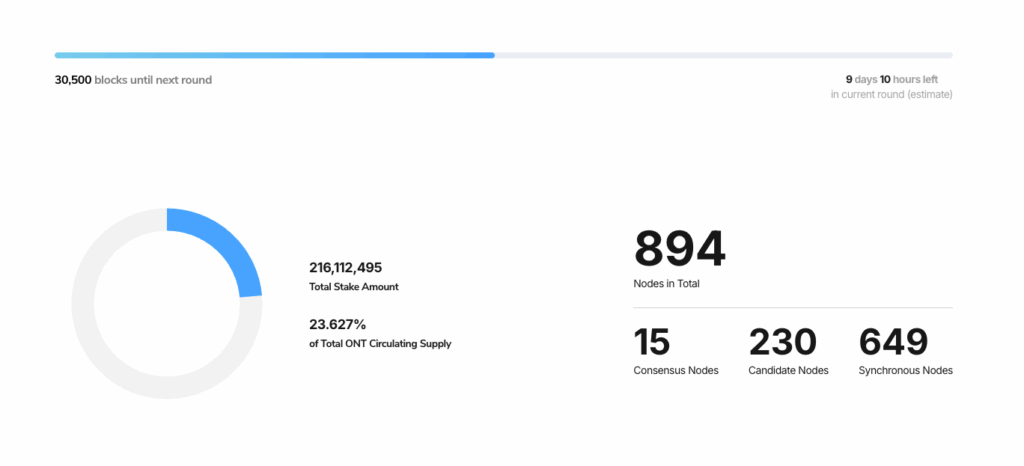
Core Stats
- Ontology Ecosystem has now recorded a total of 20,023,831 transactions.
New Mission: Community Writing Bounty 
The Ontology Ecosystem is launching a 3-week community writing bounty to spotlight one of the most important shifts in Web3: the move from EOAs to Smart Accounts through Account Abstraction.
Each week, a new topic will be announced. Write a 500–1000 word article, submit it to our Medium publication, and the winning piece will be featured for the entire community to read.
 Schedule & Topics
- Week 1: What is Account Abstraction?
- Week 2: What are Smart Accounts?
- Week 3: How Smart Accounts and Account Abstraction fit together
 Prize: $25 in ONG each week
 Judging Criteria: clarity, creativity, and community value
This is your chance to share your voice, sharpen your ideas, and help shape the conversation around Web3’s future.
Community Questions of The Month.
It’s not too late to share your opinions. Head over to Reddit to join the lively debate and help shape the future of privacy. 7 Questions to be answered. Privacy Matters!
Mission Status: Stable.
August closed with momentum across decentralized identity, reputation, and privacy. The constellations point to a busier September as Ontology Ecosystem protocols push deeper into Web3’s unexplored territory.
End Log.
]]>