Our anniversary theme, “Celebrating 8 Years of Trust. Unlocking ∞ Possibilities”, represents exactly that. Trust has always been our foundation. Possibility has always been our future. And between them lies our community, the bridge that made eight years possible.
This milestone is more than a celebration. It’s an invitation.
An invitation to look back… and to build forward.
Your Story, Our Story: Announcing “Ontology Life – Ontology & Me”
To mark our 8th anniversary, we’re launching a special community campaign:
 Ontology Life – Ontology & Me Story Sharing Contest
Over the years, Ontology hasn’t just been a protocol; it’s been part of people’s journeys as builders, developers, creators, partners, and community members. We want to hear those stories.
 Timeline
November 21 — November 30
 Prize Pool: $1,000 in ONG
 $200 ONG
 $300 ONG
 $500 ONG
Winners will be chosen based on:
- Story quality
- Engagement and votes on social media
- Final selection by the Ontology team
 How to Join
- Look for the official anniversary post on X.
- Reply under the tweet with your Ontology story, your first interaction, biggest milestone, favorite moment, or how Ontology has shaped your Web3 journey.
- Share it, hype it, tag friends, and celebrate with us.
Whether you’ve been here since the beginning or you joined last week, your story matters. Your voice is part of our history.
A Look Back: 8 Years of Building Trust
Over the past eight years, Ontology has powered secure decentralized identity, enterprise adoption, cross-chain integrations, and real-world solutions. We led the charge on DID long before it became a Web3 trend. We consistently pushed for a safer, more private, more human digital world.
From ONT ID to ONTO Wallet, from enterprise partnerships to community-led initiatives, this journey has been built together, step by step, block by block.
And the future?
The future is even more exciting.
Unlocking ∞ Possibilities: What’s Next for Ontology
We’ve been making great progress in implementing our 2025 Roadmap, as our 8th year shapes up to be an important foundation in creating a future with infinite possibilities. This next chapter is designed around one mission: empowering people with tools that make Web3 more open, more intelligent, and more connected than ever before.
Below is a deeper look at the innovations coming to the Ontology ecosystem.
 Ontology IM: Decentralized, Private Instant Messaging
Our biggest launch of the year is also one of our most ambitious.
Ontology IM is a decentralized, identity-verified messaging protocol designed for the next era of Web3 communication. Unlike traditional messaging apps that rely on centralized servers, user profiling, and opaque data practices, Ontology IM offers:
- Full end-to-end encryption with cryptographic identity verification
- True censorship resistance—no middleman controls your data
- DID-anchored messaging, ensuring that every conversation is real, verifiable, and secure
This protocol is built not just as another messaging app, but as an infrastructure layer for decentralized communication, enabling:
- dApps to embed secure messaging instantly
- Communities to coordinate without fear of censorship
- Users to enjoy seamless, private conversations across chains
After months of development and testing, Ontology IM is nearing its public debut, and the first hands-on experience will be in your grasp very soon.
 AI Marketplaces
AI and blockchain are converging faster than ever, and Ontology is positioned at the center of that evolution.
Our upcoming AI Marketplace will introduce a new layer of intelligence to the Web3 experience by enabling creators, developers, and users to:
- Deploy AI agents tailored for wallet management, data insights, identity verification, transaction support, and more
- Access AI-driven services that plug directly into the Ontology ecosystem
- Build and monetize AI tools in an open marketplace powered by decentralized identity
- Combine ONT ID + AI for secure, privacy-protected personalization
For users, this opens the door to Web3 that is more intuitive and more helpful:
- Your wallet becomes your assistant
- Your AI agents understand your on-chain activity while keeping your data private
- Everyday tasks become smoother, more automated, and more efficient
For developers, it’s an opportunity to launch intelligent tools into a global marketplace built on real identity and trust.
 DEX Integration & Liquidity Expansion
Liquidity is the lifeblood of any blockchain ecosystem, and 2025 will mark a major strengthening of Ontology’s market foundations.
Following the latest community vote and the upcoming MainNet Upgrade, the stage is set for:
- Improved liquidity for both ONT and ONG
- Enhanced token utility across the Ontology EVM
- A more accessible and connected trading environment for users and partners
Alongside these improvements, we are finalizing the requirements to bring a DEX to the Ontology EVM, enabling:
- Native swaps
- Yield and liquidity opportunities
- More robust token flows across the ecosystem
- Easier onboarding for developers building decentralized applications
This upgrade ensures Ontology remains competitive, flexible, and attractive to new builders in a rapidly evolving multi-chain world.
Thank You for 8 Years of Trust
Eight years in Web3 is more than a milestone, it’s a testament to resilience, innovation, and community. Through bull runs, bear markets, technological shifts, and global changes, Ontology has remained committed to building infrastructure that empowers people, not platforms.
To everyone who believed in Ontology, who built with us, who shared feedback, who held discussions, who contributed code, who created content, who participated in governance, who simply showed up —
Thank you.
Our story continues.
And now, we want to hear yours.
Share your story. Celebrate our journey. Shape what comes next.
Happy 8th Anniversary, Ontology!
]]>This three-part series highlights the winning articles from each week of the competition:
- Week 1: What Is Account Abstraction?
- Week 2: What Are Smart Accounts?
- Week 3: How Smart Accounts and Account Abstraction Fit Together
Together, these pieces explain how programmable wallets and decentralized identity are redefining ownership, usability, and trust across Web3.
Read on to discover how our community sees the future of blockchain. Smarter, safer, and built for everyone.
What is Account Abstraction? The Bridge to Web3 Mass Adoption
Article by Proxyma
Imagine trying to send an email but first having to manually configure SMTP servers, manage encryption keys, and pay postage fees in a specific currency you don’t own. This is essentially what Web3 feels like today. Account Abstraction (AA) promises to change that, making blockchain interactions as seamless as using Gmail.
The Current Problem: Web3’s User Experience Crisis
Today’s Ethereum wallets rely on Externally Owned Accounts (EOAs) accounts controlled by a single private key. While groundbreaking for decentralization, EOAs create massive friction:
- Gas Token Dependency: You must hold ETH to pay fees, even for simple token transfers
- Single Point of Failure: Lose your seed phrase, lose everything forever
- Complex Interactions: Each transaction requires manual approval and gas estimation
- Poor Recovery: No built-in way to recover lost accounts
These limitations explain why Web3 remains challenging for mainstream users. Account Abstraction addresses these pain points by reimagining how accounts work entirely.
What is Account Abstraction?
Account Abstraction transforms user accounts from simple private key wallets into programmable smart contracts. Instead of being bound by EOA limitations, Account Abstraction allows accounts to define custom logic for authentication, fee payment, and transaction execution.
Think of it as upgrading from a flip phone to a smartphone, the core functionality remains, but possibilities expand dramatically.
How Account Abstraction Works
Smart Contract Wallets
Instead of being tied to a private key, Account Abstraction uses a smart contract that acts as your account. This smart contract holds your tokens and assets while containing custom logic for managing the account.
ERC-4337: The Technical Foundation
The primary technical implementation of Account Abstraction comes through EIP-4337, which enables Account Abstraction without changing Ethereum’s core protocol. Here’s the simplified flow:
- UserOperations: Users create “UserOperations” containing their intended actions like token transfers.
- Bundlers: Special actors collect UserOperations and submit them in bundles.
- EntryPoint Contract: A singleton contract that validates and executes operations.
- Smart Wallets: Execute the actual transactions based on their programmed logic.
An in-depth explanation on the abstraction process can be found on this Proposal.
Paymasters: The Game Changer
Paymasters are entities that can sponsor transaction fees, enabling gasless transactions. A dApp can pay your gas fees, or you can pay in USDC instead of ETH.
Key Benefits of Account Abstraction for Users
Gasless Transactions
- Enables users to pay fees in any token (USDC, DAI, etc.)via paymaster.
- dApps can sponsor your transaction costs.
- No need to hold ETH for every interaction.
Social Recovery
Set up recovery procedures with trusted contacts or services. Lost your keys? Your designated recovery guardians can help restore access, no more permanent fund loss.
Customized Security
- Multi-signature requirements
- Spending limits for large transactions
- Time delays for high-value transfers
- Biometric authentication (Face ID, Touch ID)
Improved User Experience
- Session Keys: Authorize games to make small purchases automatically.
- Transaction Bundling: Execute multiple operations in one confirmation.
- Automated Execution: Set up recurring payments or trading strategies.
- One-Click Onboarding: Start using Web3 without seed phrases.
Real-World Applications
Gaming: Players authorize a game for micro-transactions within set limits, eliminating constant wallet confirmations while maintaining security.
DeFi: Users set automated strategies like “swap to stablecoins if my portfolio drops 20%” without keeping devices online.
E-commerce: Shoppers pay with any token they own, while merchants receive their preferred currency all sponsored by the platform.
Enterprise: Companies implement multi-department approval workflows for large transactions.
Current Implementation & Tools
- Coinbase Smart Wallet: Mainstream-friendly onboarding.
- UniPass: Actively enhancing Account Abstraction capabilities in partnership with Keystone.
- Biconomy: Developer infrastructure for gasless experiences
- Alchemy’s Account Kit: Tools for building Account Abstraction-enabled dApps
Layer 2 networks like Polygon and Arbitrum are optimizing specifically for smart contract wallets, making AA transactions faster and cheaper.
The Road Ahead
While ERC-4337 works today, additional proposals could enhance Account Abstraction:
- EIP-3074: Allows existing EOAs to delegate control to smart contracts
- EIP-7702: Proposes native account abstraction at the protocol level
These aren’t competing solutions but complementary approaches that could coexist, providing migration paths for existing users.
Why This Matters for Web3 Adoption
Account Abstraction represents Web3’s evolution from a power-user tool to a mainstream platform. Current barriers preventing mass adoption. Complex key management, mandatory gas tokens, poor recovery options are solved by Account Abstraction.
The infrastructure is maturing rapidly. What took Web2 decades to develop (user-friendly authentication, payment flexibility, account recovery) can now be built into Web3 from the ground up.
Conclusion: The Account Abstraction Revolution
Account Abstraction isn’t just a technical upgrade, it is the bridge between Web3’s technical sophistication and mainstream usability. By making accounts programmable, we unlock user experiences that rival traditional applications while maintaining blockchain’s core benefits: self-custody, transparency, and decentralization.
The question isn’t whether Account Abstraction will succeed, major wallets and dApps are already implementing it. The question is how quickly the entire ecosystem will embrace this paradigm to build truly user-friendly Web3 experiences.
As we move toward blockchain interactions as seamless as using any modern app, Account Abstraction stands as the critical infrastructure making that future possible. Web3’s next billion users won’t need to understand private keys, gas fees, or seed phrases, they’ll just use applications that happen to be decentralized.
How Smart Accounts Are Reinventing The Web3 Wallet
Article by Lahiru890
If you’ve ever used a crypto wallet like MetaMask, you’ve used an externally owned account (EOA). It’s a simple pair of keys: a public address that acts as your identity and a private key that proves you own it. This model is powerful but rigid, putting the entire burden of security and complexity on the user. Lose your seed phrase? Your funds are gone forever. Find transactions confusing? The ecosystem has little flexibility to help.
A new standard is emerging to solve these problems, moving us from rigid key-based wallets to programmable, user-friendly interfaces. The answer is smart accounts.
What is a smart account?
A smart account (or smart wallet) is not controlled by a single private key. Instead, it is a smart contract that acts as your wallet. This shift from a key-based account to a contract-based account is revolutionary because smart contracts are programmable. They can be designed to manage assets and execute transactions based on customizable logic, enabling features that were previously impossible.
This transition is powered by account abstraction (AA), a concept that “abstracts away” the rigid requirements of EOAs, allowing smart contracts to initiate transactions. While the idea isn’t new, it recently gained mainstream traction thanks to a pivotal Ethereum standard: EIP-4337.
EIP-4337 (the game changer)
EIP-4337: Account Abstraction via Entry Point Contract achieved something critical: it brought native smart account capabilities to Ethereum without requiring changes to the core protocol. Instead of a hard fork, it introduced a higher-layer system that operates alongside the main network.
Here’s how it works:
- UserOperations: You don’t send a traditional transaction. Instead, your smart account creates a UserOperation — a structured message that expresses your intent.
- Bundlers: These network participants (such as block builders or validators) collect UserOperation objects, verify their validity, and bundle them into a single transaction.
- Entry Point Contract: A single, standardized smart contract acts as a gatekeeper. It validates and executes these bundled operations according to the rules defined in each user’s smart account.
This system is secure, decentralized, and incredibly flexible.
Other key proposals (EIP-3074 and EIP-7702)
The journey to account abstraction has involved other proposals, each with different approaches.
- EIP-3074: This proposal aimed to allow existing EOAs to delegate control to smart contracts (called invokers). While simpler in some ways, it raised security concerns due to the power given to invoker contracts. It has since been paused.
- EIP-7702: Proposed by Vitalik Buterin, this upgrade would allow an EOA to temporarily grant transaction permissions to a smart contract. It offers a more elegant and secure model than EIP-3074 and may complement — rather than replace — the infrastructure built around EIP-4337.
For now, EIP-4337 is the live standard that developers and wallets are adopting.
Why smart accounts matter
The real value of smart accounts lies in the user experience and security improvements they enable.
- Gas abstraction: Apps can pay transaction fees for their users or allow payment via credit card, removing a major barrier to entry.
- Social recovery: Lose your device? Instead of a single seed phrase, you can assign “guardians” — other devices or trusted contacts — to help you recover access.
- Batch transactions: Perform multiple actions in one click. For example, approve a token and swap it in a single transaction instead of two.
- Session keys: Grant limited permissions to dApps. A game could perform actions on your behalf without being able to withdraw your assets.
- Multi-factor security: Require multiple confirmations for high-value transactions, just like in traditional banking.
The future is programmable
Smart accounts represent a fundamental shift in how we interact with blockchains. They replace the “all-or-nothing” key model with programmable, flexible, and user-focused design. Major wallets like Safe, Argent, and Braavos are already leading the way, and infrastructure from providers like Stackup and Biconomy is making it easier for developers to integrate these features.
We’re moving beyond the era of the seed phrase. The future of Web3 wallets is smart, secure, and designed for everyone.
How Smart Accounts and Account Abstraction Fit Together
Article by Nilmi Sugandhika879
Since the dawn of Ethereum, interacting with blockchains has meant using Externally Owned Accounts (EOAs) – simple wallets controlled by a private key. While functional, EOAs expose serious limitations: lose your key, and you lose your funds. Want features like spending limits, session keys, or social recovery? You’re left with clunky, layered workarounds.
Enter Account Abstraction (AA) and Smart Accounts. Together, these innovations are transforming how users engage with Web3 by merging the flexibility of smart contracts with the usability of traditional wallets. Instead of thinking about wallets as rigid containers of keys, we can now imagine them as programmable, customizable gateways into the blockchain world.
This article explores how Smart Accounts and Account Abstraction fit together, referencing key Ethereum proposals EIP-4337, EIP-3074, and EIP-7702 and why this combination is essential for building the next wave of user-friendly, secure, and innovative blockchain applications.
What is Account Abstraction?
Account Abstraction is the idea of treating all blockchain accounts as programmable entities. Instead of separating EOAs (controlled by private keys) and contract accounts (controlled by code), AA allows accounts themselves to act like smart contracts.
Key benefits of AA include:
- Gas abstraction: Pay transaction fees in tokens other than ETH.
Programmable security: Add multi sig, time locks, or social recovery. - Batched transactions: Execute multiple actions in one click.
Session keys: Grant temporary permissions for games or dApps. - Upgradability: Evolve wallet logic without replacing accounts.
With AA, wallets evolve from being passive key holders into active smart entities capable of executing logic on behalf of their users.
What are Smart Accounts?
If Account Abstraction is the theory, Smart Accounts are the practice. A Smart Account is simply a blockchain account that operates under the AA model.
Instead of relying on a single private key, a Smart Account:
- Runs customizable logic like a smart contract.
- Supports flexible authentication methods (biometrics, passkeys, hardware modules).
- Allows advanced features such as automatic payments, subscription models, or delegated access.
- Provides recoverability through trusted guardians or social recovery mechanisms.
In short, Smart Accounts are the user-facing manifestation of Account Abstraction. They bring abstract design principles into tangible experiences, making Web3 more accessible for everyday users.
How They Fit Together
Think of Account Abstraction as the architectural blueprint and Smart Accounts as the actual buildings.
AA defines the rules
- It sets the framework for programmable accounts.
- Proposals like EIP-4337 specify how transactions are validated and bundled without relying solely on EOAs.
Smart Accounts implement the rules
- They apply those AA rules to create practical wallets.
- Through smart contracts, they support features like gasless transactions, account recovery, and key rotation.
Together, AA and Smart Accounts replace the outdated key-wallet model with a flexible, modular system where user experience comes first.
The Role of Key EIPs
Ethereum’s progress toward AA and Smart Accounts has been guided by several proposals:
- EIP-4337 (2021):
Introduced the concept of a “UserOperation” and “bundlers.” This allows smart accounts to function without requiring changes at the consensus layer. It is the backbone of today’s AA-compatible wallets. - EIP-3074:
Enables EOAs to delegate control to contracts temporarily, bridging the gap between old wallets and smart accounts. - EIP-7702 (2024):
Builds on 3074 but provides a safer and more streamlined way for EOAs to transition into smart accounts. This is critical for onboarding existing users without forcing them to abandon their current wallets.
Together, these proposals ensure that Smart Accounts are not just theoretical they’re backward-compatible, forward-looking, and ready for mainstream adoption.
Why This Matters for Users
For users, the combination of AA and Smart Accounts translates into real-world improvements:
- Safety: Lose your key? No problem recover your wallet using guardians or multi-sig setups.
- Simplicity: Pay fees with stablecoins, batch multiple dApp actions into one transaction, or play a blockchain game without constant wallet prompts.
- Flexibility: Switch security models as your needs change (e.g., from a simple wallet as a beginner to a multi sig or hardware protected wallet as your assets grow).
- Innovation: Developers can build richer applications subscription based dApps, automated DeFi strategies, or Web3-native identity systems.
This shifts the user experience from fear of making mistakes to freedom to explore.
A Fresh Perspective: Smart Accounts as Digital Personas
One way to think creatively about Smart Accounts is to view them not just as wallets, but as digital personas.
Just as you might have different identities in real life personal, professional, or gaming Smart Accounts allow you to manage multiple digital personas:
- A DeFi persona with automated trading strategies.
- A gaming persona with session keys and gasless interactions.
- A professional persona tied to your DAO contributions.
Each persona can run its own logic while remaining linked to your overall identity. This flexibility makes Web3 personalized and intuitive, much like the evolution from simple feature phones to today’s smartphones.
Practical Takeaways for the Community
- Developers: Start experimenting with Smart Account SDKs built on EIP-4337. Building dApps with native AA support will set you apart in the next wave of adoption.
- Users: Explore AA wallets like Safe, ZeroDev, or Soul Wallet. Get familiar with recovery options and gas abstraction to see the difference firsthand.
- Communities: Advocate for dApps that integrate Smart Accounts, since these models reduce onboarding friction for newcomers.
By engaging now, the community can shape how AA and Smart Accounts evolve, ensuring they remain inclusive, secure, and user first.
Conclusion
Smart Accounts and Account Abstraction are not isolated innovations they are two halves of the same revolution. Account Abstraction lays the foundation, while Smart Accounts bring it to life. Together, they unlock a Web3 experience that is safer, simpler, and infinitely more flexible than today’s wallet paradigm.
Just as the smartphone redefined what we expect from communication devices, Smart Accounts will redefine what we expect from blockchain wallets. They are not just tools to hold assets they are programmable, adaptable, and deeply human centric gateways into the decentralized world.
The future of Web3 isn’t just about protocols or assets it’s about empowering people with smarter, safer, and more intuitive digital identities. And that future begins with Smart Accounts powered by Account Abstraction.
Delve Deeper With Ontology
Interested in how Account Abstraction and Smart Wallets are going to change your Web3 experience Learn More: https://ont.io/news/https-ont-io-news-smart-wallets-account-abstraction/
Get started with ONTO Wallet today: onto.app
]]>Hand someone your Web3 wallet address and watch their face twist. Forty-two characters of nonsense, like a Wi-Fi password from hell. Tell them one typo makes the money vanish forever. Then hand them a list of random words called a seed phrase and explain their entire identity depends on keeping them safe.
This is the state of Web3 identity. No wonder onboarding feels impossible.
Here’s the problem: Web3 identity has always been tied to Externally Owned Accounts, or EOAs. That model worked in the early days. One private key, one account, simple enough to get Web3 off the ground. But EOAs were designed for signing transactions, not representing people.
They work fine as vaults for long-term holdings. They don’t work for daily life, where recoverability, usability, and flexibility actually matter.
That is where Account Abstraction comes in. It turns a static wallet into a programmable smart account and lays the foundation for portable, reputation-based identity in Web3.
Here are seven reasons why smart wallets and Account Abstraction represent the future of Web3 identity in daily life.
Reason 1: Why EOAs Work as Vaults but Fail for Web3 Identity
EOAs still make sense for what they were built for: vaults. Cold storage, long-term holdings, staking positions, anything you plan to lock up and leave untouched. Paired with a hardware wallet, they are nearly bulletproof.
But the moment you try to use an EOA as daily identity, it falls apart. One mistake with a private key means permanent loss. There is no recovery, no backup, no flexibility. You cannot add permissions, set conditions, or adapt the account as your needs change. And because EOAs are just hex strings, they cannot carry context, trust, or reputation.
That rigidity is fine for storage. It is disastrous for identity. Credentials need to be recoverable, identifiers need to be readable, and accounts need to evolve with people. For that, we needed something beyond EOAs.
Read More: [The Role of EOAs in Long-Term Web3 Identity].
Reason 2: How Account Abstraction Makes Web3 Identity Programmable
Account Abstraction takes us beyond static EOAs. Instead of one key controlling one account, smart wallets carry their own logic. They can batch transactions, automate small approvals, and let you pay gas in the tokens you already hold. In some cases, dApps can even cover the fees for you.
Just as important, smart wallets are flexible. You can set up recovery through guardians, add backup devices, or customize rules for how your identity works across apps. That makes identity portable, resilient, and practical for daily use.
This is the real shift. EOAs will always work as vaults, but identity in Web3 needs programmability. With Account Abstraction, the account adapts to people, not the other way around.
Coming Soon: [How Account Abstraction Changes the Wallet Forever].
Reason 3: Passkeys and Social Recovery Bring Human Usability to Web3 Identity
Everyone in Web3 knows the pain of seed phrases. Twenty-four random words that unlock everything, but with zero forgiveness. Lose them and your account is gone. Share them and someone else can take it all. That rigidity makes sense for deep storage, but for daily identity it is a disaster.
Smart wallets offer a better model: Passkeys. Instead of memorizing words or hiding them in fireproof safes, you use the secure chip already built into your phone or laptop. Face ID, Touch ID, or a system PIN unlocks your wallet the same way it unlocks your apps. The cryptography still runs in the background, but for the user it feels natural and familiar.
That shift is massive. It makes decentralized identity accessible to people outside the crypto niche. No one wants to explain hex strings or seed words to their parents. With Passkeys, Web3 identity starts to look like the technology people already trust every day.
Recovery is the second piece of the puzzle. With Account Abstraction, you can set up social or technical recovery flows instead of living under the “one key to rule them all” model. Maybe you add three guardians and require two to approve a recovery. Maybe you use a backup hardware wallet as a failsafe. Maybe you blend social and technical recovery for extra safety. The point is that you have options, and those options reflect real life. Phones get lost. Devices break. People forget things. Identity should survive all of that.
This flexibility makes decentralized identity usable at scale. Hardcore early adopters might accept the risk of managing seed phrases forever, but mainstream users will not. They want Face ID-level convenience paired with the sovereignty of self custody. Smart wallets make that possible.
Seed phrases will still matter for vaults. But for daily life, Passkeys and recovery turn identity from brittle to human. That is the leap Web3 needs if it is ever going to move from niche adoption to mainstream reality.
Coming Soon: [Passkeys and Social Recovery: Making Decentralized Identity Human].
Reason 4: Human-Readable Domains Make Decentralized Identity Recognizable
EOA addresses look like gibberish. They work for machines, not for people. Smart wallets fix that with human-readable domains. Instead of pasting a 42-character string, you can share something like name.ont.id.
That change is more than cosmetic. A custom domain is short, portable, and easy to trust. You can share it in a message, post it on social, or use it across dApps without worrying about copy-paste errors. Over time, it becomes more than just an address. It becomes reputation.
Unlike Web2 usernames locked in corporate silos, ONT ID domains are self-sovereign. You own them, you control them, and you carry them across chains and platforms. That makes identity not just more readable, but more human.
Coming Soon: [Why Human-Readable Domains Matter in Decentralized Identity].
Reason 5: Cross-Chain Identity Portability Unlocks the Multichain Web3
Web3 today is fragmented. Most users manage more than one wallet: one on Ethereum, another on Polygon, maybe one on BNB Chain, and a few more on Layer 2s. Wallet apps bundle them together in the interface, but under the hood each address is its own silo with its own rules, recovery risks, and limitations.
That fragmentation is one of the biggest obstacles to Web3 identity. You can link different addresses to a DID, but that is just stitching them together. They still act independently. Lose a private key and you lose that entire account, no matter how many others you control. If you want consistent recovery, permissions, or gas logic across environments, you have to set it up again and again.
Smart wallets solve this by making identity programmable across chains. Instead of rebuilding logic every time, one smart account can carry consistent rules wherever you go. The same recovery flow, the same permissions, the same reputation signals. All portable across ecosystems.
The impact is huge.
- You can move assets between EVM-compatible chains without juggling new addresses and recovery setups.
- You can manage sub-accounts under one recognizable identity.
- You can prove ownership and activity across ecosystems without starting over from scratch.
ONT ID makes this portability real. It connects your DID to smart accounts that travel with you. Whether you are staking, using DeFi, joining a DAO, or verifying credentials, your identity logic stays intact.
Web3 is not heading toward a single chain monopoly. It is a multichain reality. For decentralized identity to scale in that world, it has to move seamlessly across environments. EOAs tied to a DID point in that direction, but only Account Abstraction and smart wallets make it practical, consistent, and human.
Coming Soon: [Cross-Chain Identity: The Key to Mass Adoption].
Reason 6: Portable Reputation Systems Add Trust to Web3 Identity
Identity without reputation is hollow. An address on a blockchain tells you nothing about the person behind it. What gives identity meaning is context, proof that the account has history, trust, and credibility. Without that, every interaction starts from zero.
In Web2, reputation is locked inside platforms. Your eBay stars, your Uber rating, your LinkedIn profile. All of it lives in walled gardens, useful until the moment you leave. Change platforms, lose access, or get removed, and years of history vanish overnight. Reputation is trapped, owned by the platform, not by you.
Web3 makes something better possible: portable reputation. With frameworks like Orange Protocol’s OHS, built on ONT ID, trust can move with you. Instead of starting from scratch each time you join a new platform, you carry cryptographic proof of your history across ecosystems.
Here is how it works. OHS issues verifiable credentials that prove facts about your activity without exposing sensitive details:
- Proof that you completed KYC on an exchange.
- Proof that you staked tokens for a full year.
- Proof that you participated in DAO governance.
Each credential strengthens your reputation, but none of them reveal your personal data. You can prove you are verified without handing over your passport. You can prove your staking history without exposing balances. You can prove governance participation without disclosing votes. Privacy stays intact while reputation becomes visible.
Account Abstraction makes these credentials even more powerful. Instead of just attaching them to a DID, a smart account can hold them natively, automate how they are shared, and apply rules for when and where to present them. Reputation is not only portable, it is programmable.
The implications are enormous. Communities can reduce risk by recognizing identities with a proven history. Platforms can onboard trusted users without reinventing verification. Individuals can carry their reputation across chains, dApps, and even industries without starting from zero. And because it is built on ONT ID and OHS, reputation is not tied to a single platform. It belongs to you.
For decentralized identity to matter at scale, it has to move beyond ownership of identifiers. It has to carry the social layer of trust that makes identity useful. Portable, privacy-preserving reputation is the missing piece, and with smart wallets and ONT ID, it is finally here.
Coming Soon: [Reputation in Web3: How Orange Protocol Completes the Puzzle].
Reason 7: Zero Knowledge Proofs Enable Privacy-Preserving Compliance in Web3
Regulation is coming fast. The UK and Australia already require age verification for certain online platforms. The EU and US are considering similar rules. The goal is accountability, but the way compliance works today is broken.
Traditionally, compliance means handing over your government ID to a centralized platform or a third-party vendor. That information is stored in massive databases, cross-checked, and often shared far beyond your control. The risks are obvious: constant surveillance, data leaks, identity theft, and total loss of sovereignty. Compliance has come to mean giving everything away.
Decentralized identity changes that equation. With ONT ID, compliance does not require surveillance. Instead, it uses Verifiable Credentials and Zero Knowledge Proofs to confirm facts without exposing raw data.
Take age verification as an example. Instead of uploading a driver’s license, you present a credential that only confirms “over 18.” The verifier sees nothing else. Your birthdate, address, and ID number stay private. ZK TLS extends this protection to live sessions, letting a verifier confirm credentials without ever touching the underlying data. With Zero Knowledge Proofs, you can prove almost anything: that you live in a certain country, that your account balance meets a threshold, or that you passed KYC, without revealing the details.
Account Abstraction makes these privacy-preserving proofs usable in practice. Credentials can be stored directly in smart wallets, and programmable rules can decide when and how they are shared. You might set conditions that only reveal an age credential to specific services, or that require guardian approval before releasing financial data. Recovery flows can be built in so losing a device does not mean losing access to your compliance credentials.
The result is compliance that protects everyone. Regulators get the verification they need. Users keep control of their data. Platforms and governments avoid the liability of massive personal databases waiting to be hacked. Privacy becomes the default, not the exception.
This balance is essential for the next era of Web3. People will not adopt decentralized identity if it forces them into the same surveillance traps that define Web2. Smart wallets combined with ONT ID prove that identity can be both compliant and sovereign, both verifiable and private. That is the only model that will work in the regulatory world we are heading into.
Coming Soon: [KYC, Compliance, and Privacy: The Case for Verifiable Credentials].
The Road Ahead
Externally Owned Accounts are not disappearing. They were the foundation of Web3’s early years and remain the most secure way to lock assets away for the long term. As vaults, they are unmatched. They are simple, reliable, and battle tested. That role will continue for as long as people need cold storage for tokens, investments, and credentials.
But identity cannot live in vaults. Daily life demands more. Payments, credentials, governance, social interactions, reputation, even AI agents representing us online all require identity that is flexible, recoverable, and portable. EOAs cannot deliver that.
Smart wallets and Account Abstraction unlock that next step. They turn static wallets into programmable infrastructure. Passkeys replace fragile seed phrases. Recovery flows replace catastrophic loss. Custom domains make identity readable. Cross-chain logic makes it portable. Reputation systems make it meaningful. Privacy-preserving proofs make it compliant without sacrificing sovereignty. Together, these features transform decentralized identity from a whitepaper concept into something people can actually use.
Ontology’s ONT ID sits at the center of this shift. It bridges EOA-based custody with smart, human-friendly identity built on Account Abstraction. Anchored in ONTO Wallet, expanded through Ontello, and connected to Orange Protocol’s OHS, ONT ID delivers the full stack: security for vaults, usability for daily life, and sovereignty at every step.
Adoption is the bigger picture. Web3 will not scale if identity remains tied to EOAs. People will not memorize seed phrases, manage dozens of wallets, or risk losing everything with one mistake. They also will not accept identity systems that trade privacy for surveillance. If decentralized identity is going to compete with Web2 and surpass it, it has to be both sovereign and usable. That is exactly what ONT ID was built for.
The future is not about replacing EOAs. It is about expanding beyond them. Vaults still matter, but everyday identity requires something more forgiving, more flexible, and more human. Smart wallets and Account Abstraction make that possible, and Ontology is building the bridge.
Conclusion
So are smart wallets just wallets? Not anymore.
In the era of EOAs, a wallet was simply a vault. It held tokens, secured them with a single private key, and gave people a way to send or receive value. That model worked, and still works, for storage. But as Web3 matures, identity is no longer about storage alone. It is about interaction, reputation, portability, and privacy in a world of increasing regulation. A vault cannot carry all of that weight.
Smart wallets are different. They are programmable accounts designed to adapt to people. They can batch transactions, automate routine approvals, and support recovery flows. They work with passkeys instead of fragile seed phrases. They carry verifiable credentials and portable reputation. They make compliance possible without forcing users into surveillance databases. In short, they are built for everyday identity.
EOAs are not going away. They remain the safest option for long-term storage, the vaults of Web3. The division of roles is clearer than ever. EOAs secure the foundation. Smart wallets make identity usable. Together they cover both ends of the spectrum, so people no longer need to choose between security and usability.
Ontology is building for this future. ONT ID anchors decentralized identity. ONTO Wallet makes it usable in applications. Orange Protocol brings reputation into the picture with frameworks like OHS. Ontello delivers Account Abstraction so identity can be portable, programmable, and human.
The larger point is that decentralized identity is no longer theory. It is something you can hold, recover, and use across ecosystems without losing control. Smart wallets turn identity into infrastructure that adapts to real life. EOAs keep assets safe. ONT ID connects both worlds.
This is what it means for Web3 identity to move out of the vault and into everyday life.
Try It Yourself
You do not have to wait to explore decentralized identity.
- Create your ONT ID today with ONTO Wallet.
- Manage assets securely while testing verifiable credentials and reputation tools.
- Get ready for Ontello, launching soon, which will bring Account Abstraction to the ONT ID ecosystem.
Ontology is launching a 3-week community writing bounty to spotlight one of the most important shifts happening in blockchain today: the move from Externally Owned Accounts (EOAs) to Smart Accounts through Account Abstraction.
Why Account Abstraction Matters
Since Ethereum’s earliest days, most users have interacted with blockchains through EOAs, simple wallets controlled by private keys. While effective, this model has severe limitations. If you lose your keys, you lose your assets. Features like multi-sig, social recovery, or spending limits require clunky workarounds.
Account Abstraction (AA) is designed to fix this by allowing accounts themselves to act like smart contracts. Instead of rigid EOAs, we gain programmable accounts that can support features such as:
- Gas abstraction (paying fees in tokens other than ETH)
- Social recovery and key rotation
- Batched transactions
- Session keys for dApps and games
- Flexible security models
The EIPs Behind the Shift
Three Ethereum Improvement Proposals (EIPs) have pushed Account Abstraction forward:
- EIP-4337: Often called “Account Abstraction via Entry Point Contract”, this proposal enables Smart Accounts without changing the Ethereum protocol itself. It introduces a higher-level system of UserOperations, bundlers, and a shared entry point contract. EIP-4337 went live in 2023 and is the foundation for many Smart Account wallets today.
- EIP-3074: This proposal allows EOAs to delegate control to a contract using new opcodes. In practice, this could enable existing wallets to gain Smart Account features without fully migrating. While still debated, it is seen as complementary to EIP-4337.
- EIP-7702: Introduced in 2024, this proposal refines the approach by allowing EOAs to temporarily behave like smart contract accounts during a transaction. It is considered a successor to EIP-3074 and could bridge the gap between today’s EOAs and future Smart Accounts in a more flexible way.
Together, these EIPs open the door to Smart Accounts and Smart Wallets, accounts that feel as intuitive as Web2 logins while retaining the sovereignty of Web3.
Smart Accounts and Smart Wallets
Smart Accounts, sometimes called Smart Wallets, represent the next step in blockchain usability. Instead of juggling seed phrases and worrying about a single point of failure, users can enjoy:
- Built-in recovery via trusted guardians or social circles
- Multi-device access without compromising security
- Automated payments and subscriptions
- Richer integrations with dApps and DAOs
In short, Smart Accounts bring Web2 convenience to Web3 security, a change as big as moving from dial-up internet to broadband.
The Writing Bounty
We want to hear from you, the Ontology community. Over the next three weeks, we will run a writing bounty to gather perspectives, explainers, and insights on this shift.
Schedule & Topics
- Week 1: What is Account Abstraction?
- Week 2: What are Smart Accounts?
- Week 3: How Smart Accounts and Account Abstraction fit together
 Rewards
- Prize: $25 in ONG each week
- One winner published weekly on Ontology’s Medium
 Judging Criteria
Submissions will be evaluated based on the following factors:
Presentation: Clear formatting, logical flow, and concise language will strengthen the impact of your article. Visuals such as diagrams or charts are welcome but not required.
Clarity: Articles should be easy to read and well-structured, making complex concepts like Account Abstraction, Smart Accounts, and the relevant EIPs understandable for a broad Web3 audience.
Accuracy: Technical details must be correct, especially when referencing Ethereum proposals such as EIP-4337, EIP-3074, and EIP-7702. Sources should be cited where appropriate.
Creativity: We encourage fresh perspectives, original explanations, and engaging writing styles that stand out from generic technical summaries.
Community Value: Articles should offer insights or practical takeaways that help the community learn, debate, or apply Account Abstraction in real contexts.
Relevance: Submissions should align with the weekly topic and stay focused on Account Abstraction, Smart Accounts, and Smart Wallets rather than drifting into unrelated areas.
 How to Participate
To join, contact your Head of Community or local Harbinger to be added as a contributor to our Medium publication. Once you have access, you can submit directly to the bounty topics.
Mission Status: Active
Account Abstraction and Smart Accounts are changing how millions will experience Web3. This writing bounty is your chance to not only win rewards but also help shape how our community understands and navigates this transformation.
Stay on mission and bring your best ideas to the page.
Mission Status: Active. Your words can help chart the course of Web3.
]]>The Ontology Ecosystem continues its orbit through decentralized identity, reputation, and privacy. August brought fresh launches, new quests, and community-driven momentum across ONTO Wallet and Orange Protocol. Below, I’ve logged the most notable signals from the network.
Sector Scan: DID & Web3 Reputation
- Sony breaks orbit with Soneium Score – a reputation-driven system deployed on its new Ethereum L2, Soneium. Proof that even corporate giants see trust as the missing link in decentralized economies.
- Humanity Protocol ignites mainnet – $1.1B in valuation at launch, promising a privacy-first bridge for digital identity. Another ambitious attempt to balance verification with sovereignty.
- Polkadot’s Proof of Personhood – designed to fight Sybil attacks with identity attestation. The experiment is bold: linking individuality to chain-level consensus.
- MetaMask deploys Social Login – identity abstraction enters mainstream wallets, letting users authenticate without juggling seed phrases. Seamless, but the jury’s still out on decentralization.
Ontology Command Updates
- Activated the ONT ID Loyalty Quest on Intract: Loyal NFT Plus rewards, swappable for $ONG once 10 NFTs are collected. You can still take part!
- Ontology Ecosystem activity also included the monthly quiz on Discord, rewarding sharp minds with ONG via Loyal Member NFTs.
- Hosted Privacy Hour Space, featuring voices from across the ecosystem, including @asmallguppy of MyEtherWallet.
- Logged new community dispatches:
- Article from @Emmiz_E on Ontology’s role in global finance.
- Poll on integrations for @ont_did.
- A deep-dive video on Zero Knowledge Proofs by @AaronITS__.
- A thought-piece on digital distrust.
- Announced missions to Japan: Ontology docked at WebX Tokyo 2025 and the WebX Fintech Expo in Osaka.
- Recorded the outcome of the OG Trader Competition.
- Published consensus round 259 summary.
ONTO Wallet Operations
ONTO Wallet remains a core hub within the Ontology Ecosystem.
- Released V4.9.10, expanding bridges to Solana, TON, and Tron, and optimizing WalletConnect.
- Broadcasted the Top 10 dApps and Top 10 chains in ONTO for July.
- Orchestrated multiple rounds of the TON trading lucky draw with @ston_fi, rewarding participants through four waves of announcements.
Orange Protocol Transmission
Orange Protocol expands Ontology Ecosystem capabilities by building zkTLS use cases that support trust and Sybil resistance.
- Deployed a series of guides on Orange Pass, showcasing its use in grants, bounties, retro funding, and DAO Sybil resistance through multi-source zkTLS proofs.
- Promoted the ONT ID Loyalty Quest.
- Published contributor work from @AliMathusginola.
- Launched Orange Pass on the Chrome Web Store, bringing zk proofs of Web2 data into orbit.
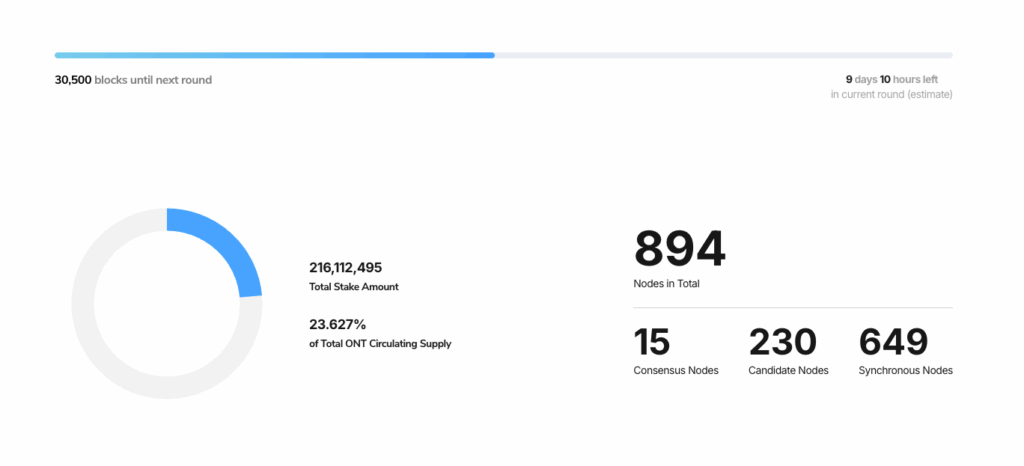
Core Stats
- Ontology Ecosystem has now recorded a total of 20,023,831 transactions.
New Mission: Community Writing Bounty 
The Ontology Ecosystem is launching a 3-week community writing bounty to spotlight one of the most important shifts in Web3: the move from EOAs to Smart Accounts through Account Abstraction.
Each week, a new topic will be announced. Write a 500–1000 word article, submit it to our Medium publication, and the winning piece will be featured for the entire community to read.
Schedule & Topics
- Week 1: What is Account Abstraction?
- Week 2: What are Smart Accounts?
- Week 3: How Smart Accounts and Account Abstraction fit together
Prize: $25 in ONG each week
 Judging Criteria: clarity, creativity, and community value
This is your chance to share your voice, sharpen your ideas, and help shape the conversation around Web3’s future.
Community Questions of The Month.
It’s not too late to share your opinions. Head over to Reddit to join the lively debate and help shape the future of privacy. 7 Questions to be answered. Privacy Matters!
Mission Status: Stable.
August closed with momentum across decentralized identity, reputation, and privacy. The constellations point to a busier September as Ontology Ecosystem protocols push deeper into Web3’s unexplored territory.
End Log.
]]>